
Day one, the engine turns over before sunrise. The vehicle is part classroom, part library, part staff room — and by the time it reaches the first stop, a small crowd of students is already waiting at the roadside, notebooks in hand.
This is Education on Wheels. For students preparing for exams like JEE and NEET, distance has always been the quiet disqualifier: the nearest serious coaching is a city and a bus fare away. So the coaching comes to them instead, parking where ambition has always outrun access.
The bus does not wait for children to reach a school. It brings the school to the children.
Over the week the pattern repeats — different villages, the same hunger. What stays with you is not the syllabus but the concentration: teenagers who treat two hours of instruction as something precious, because for them it is. At the end of several routes wait our model schools and labs, where that momentum can finally settle into a desk of its own.
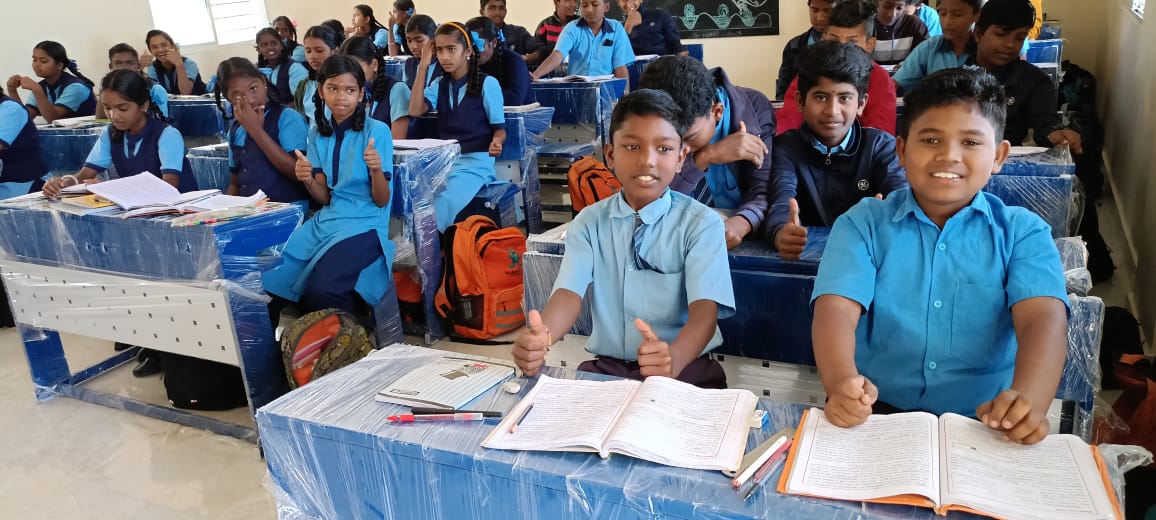
By the last day the diary is full of names rather than numbers. That feels right. A mobile classroom is measured one student at a time — and every one of them is a door that geography had kept shut.